
Garage Door Spring Repair in Cary & Raleigh
Heard a bang from the garage? Look, don’t lift.
A broken garage door spring has to be replaced, not patched, and the work belongs with a trained technician. If the door suddenly won’t lift, stop using it. American Pro Garage Doors replaces torsion and extension springs in Cary, Raleigh and across the Triangle.
5.0 on Google, 600+ reviews. 108 Woodwinds Industrial Ct, Ste G, Cary, NC 27511. Call to schedule a visit.
What should you do if your garage door spring breaks?
Stop using the door and leave it where it is. Don’t press the opener, lift the door by hand or pull the red release cord: without the spring, nothing holds the door’s weight. Keep people and pets away, and call a trained technician to replace the spring. If the door is closed, you can look from inside the garage. If it’s stuck open or partly open, stay out from under it.
Leave the door exactly where it is. A door that has lost its spring is no longer balanced, so its full weight sits on whatever is holding it up. That could be the opener, a cable, or your arms.
Don’t
- Press the wall button or remote again to “see if it works.”
- Lift the door by hand, or prop it with a ladder or a board.
- Pull the red release cord. It can take away the only thing holding the door.
- Touch the spring, the cables, or the brackets at the bottom corners of the door.
- Walk or park under a door that is stuck open or partly open.
Do
- Keep kids, pets and cars away from the door.
- Use another way in and out of the house for now.
- Take a photo from a safe distance, if you can get one.
- Tell us if a car is parked inside when you call.
- Call (919) 944-7334 and describe what you heard and what you see.
The Look, Don’t Lift check: what actually broke?
You can narrow this down in about a minute without touching anything. With the door closed, stand inside the garage, well back from the door, and use your eyes only. If the door is stuck open or partly open, skip the check, stay out from under it, and call.
- Look up at the bar above the door. Coil springs sit on this bar. A clean gap in one coil means that spring has snapped.
- Look along the tracks on the ceiling. If your long springs run beside the tracks instead, check whether one hangs loose or looks stretched out.
- Look down the sides of the door. A thin steel cable runs up each side. It should be tight. A loose or dangling cable often comes with a spring failure.
Match what you see to the likely cause
| What you notice | Most likely cause | Keep using the door? | Next move |
|---|---|---|---|
| Loud bang, and now the door won’t lift | Snapped torsion spring | Stop | Call for spring replacement |
| Gap in a coil on the bar above the door | Snapped torsion spring, confirmed | Stop | Call for spring replacement |
| Door rises a few inches, then the opener quits | Broken or badly weakened spring. The opener is stopping because the load is too heavy. | Stop | Call. Repeat tries can strain the opener. |
| Door goes up crooked or hangs lower on one side | One of two springs has failed, or a cable has come off | Stop | Call. A crooked door can jump the track. |
| Cable loose, dangling or frayed | Cable failure, often tied to a spring problem | Stop | Don’t touch it. Cables are under spring tension. |
| Long spring beside the track hangs loose | Broken extension spring | Stop | Call, and mention whether you see a safety cable |
| Rollers out of the track, door hung up unevenly | Off-track door, which may or may not involve a spring | Stop | See garage door repair |
| Solid tube above the door with no coils, plus any symptom above | Wayne Dalton TorqueMaster system. The springs sit inside the tube, so you can’t see a break. | Stop | Go by symptoms and call |
| Door opens and closes evenly, but feels heavier or slams shut by hand | Springs losing tension, or a door that has gained weight | Book soon | Have the balance checked before a spring lets go |
| Door sags in the middle | Tired panels or struts, sometimes a door too heavy for its springs | Book soon | Get it inspected |
| Motor runs, the door doesn’t move, and you see a broken belt or chain | Opener failure, not a spring | Hold off | Ask about opener replacement |
| Door runs evenly but it’s loud | Worn rollers or normal spring noise | Can wait | Mention it at your next service |
This table helps you describe the problem. It doesn’t replace an inspection, and we’ll confirm the cause on site.
Torsion, extension or TorqueMaster: which springs do you have?
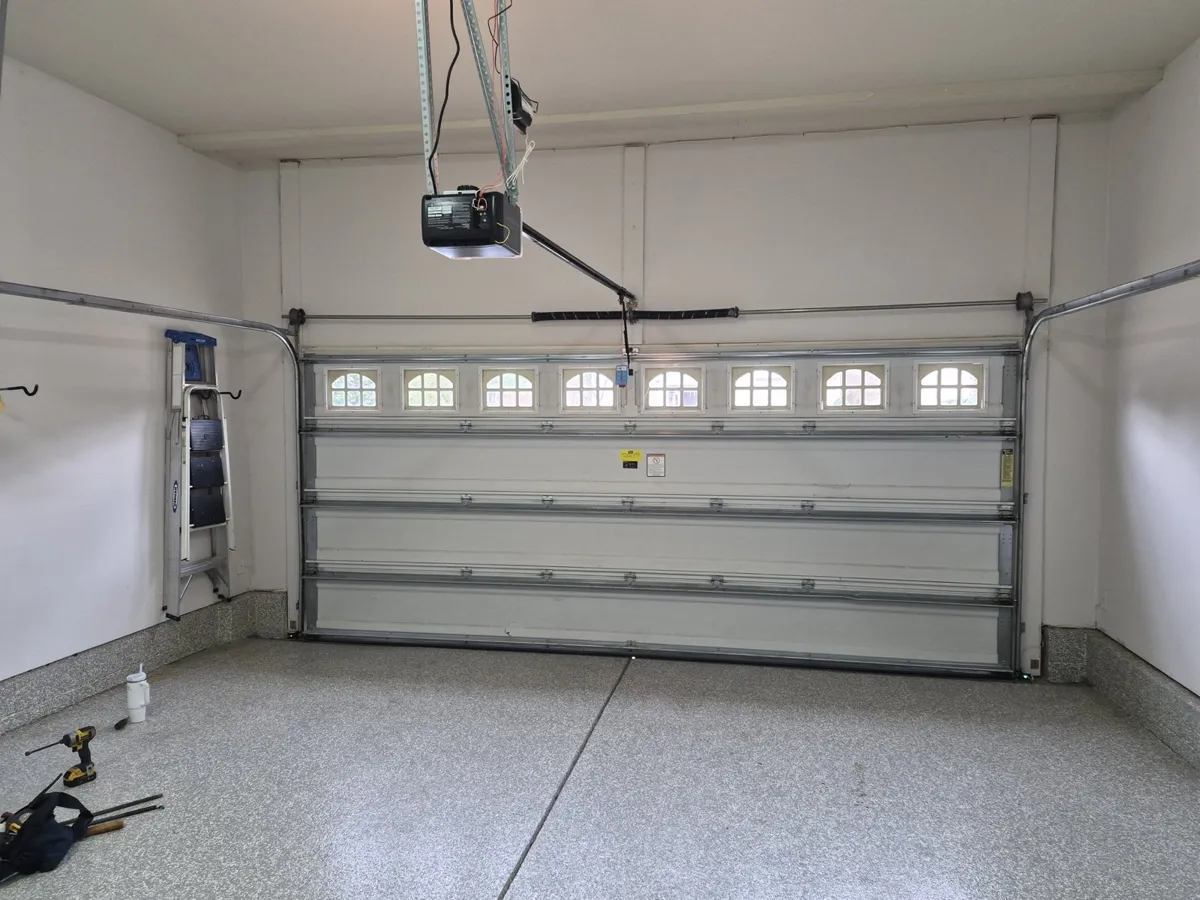
Most garage doors use torsion springs, which sit on a bar above the door and twist to lift it. Older and lighter doors often use extension springs, which stretch beside the ceiling tracks. Knowing which you have makes the call faster and the quote more accurate.
| System | Where it sits | What failure looks like | Worth knowing |
|---|---|---|---|
| Torsion | On a bar above the door opening | A visible gap in the coil and a loud bang | One or two springs, depending on the door |
| Extension | Beside each horizontal track | A loose or hanging spring, and a lopsided door | Needs a safety cable through each spring to contain a break |
| TorqueMaster | Inside a tube above the door | No visible sign, only a door that won’t lift properly | Found on Wayne Dalton doors |
Can you replace a garage door spring yourself?
DASMA, the door industry’s trade association, calls springs “arguably the most important and most dangerous part of your door.” It also says spring systems should be repaired only by trained professionals, and its spring data sheet says homeowners should not use it to replace springs.
We won’t publish spring replacement steps on this page, and here’s why:
- The energy is stored, even when the door looks still. DASMA’s extension spring table covers doors from 50 to 300 pounds, and the spring is what holds that weight. Cables and bottom brackets carry that same tension.
- The wrong spring is its own hazard. A spring has to match the door’s weight and height. A color mark alone won’t tell you that. DASMA warns that color codes only partly identify a spring.
- A heavy door can fall. Once the spring is out of the system, nothing balances the door.
- Parts sold online don’t include the judgment. Sizing, tension and a final balance check are where the risk lives, and none of those come in the box.
What a proper spring replacement should include
A proper job is more than swapping one coil. The technician should identify the right spring for your door, replace both springs on a two-spring door, inspect the parts the spring load runs through, and test the door before leaving. Hold any company to this list, including us. Sizing means measuring wire size, inside diameter and length, not just matching a color mark.
- Right spring, confirmed. Matched to the door’s weight, height and hardware, not guessed from the old one.
- Both springs on a two-spring door. DASMA recommends replacing both, even if only one broke.
- Cables, drums, bearings and bottom brackets checked. Worn parts are easier to deal with now than after they fail.
- Safety cables on extension springs. If yours has none, ask for them.
- Balance test. The door should stay put when stopped partway, not fall or shoot up.
- Opener and safety reverse rechecked. New springs change how the door loads the opener.
- Old springs explained. You should hear why it failed and whether anything else is wearing out.
What affects the cost of garage door spring replacement?
We don’t post a flat price, because two doors on the same street can need different springs. The price depends on the spring type, whether one spring or both are replaced, the door’s weight and size, and whether cables or drums are worn too. Call with your door’s size and a photo, and you get a written quote before any work starts.
The price of a spring replacement depends on the spring type, how many springs the door uses, the door’s size and weight, and whether cables or other parts are worn. Call us for a quote, and ask for the full price in writing before any work starts, from us or anyone else.
| Service | What changes the cost |
|---|---|
| Torsion springs, pair | Door weight and height, spring size and cycle rating |
| Torsion spring, one-spring door | Door weight and spring size |
| Extension springs, pair | Door weight, and whether safety cables are already in place |
| Safety cables, if missing | Needed on extension springs that run without them |
| Lift cables, if worn | One side or both, and the drum condition |
| Higher-cycle spring upgrade | The cycle rating you choose |
What moves the price
- Torsion or extension system
- One spring or two
- Door width, height and weight, including any insulation added later
- Standard spring or higher-cycle spring
- Worn cables, drums or bearings found during the visit
Six questions to ask any company before you say yes
- Is that price for one spring or both?
- Does it include the service call and labor?
- What cycle rating are the new springs?
- How did you size them for my door?
- What warranty comes with the springs, and with the labor?
- Will I see the price in writing before you start?
Have this ready when you call
Door width and height, one door or two, whether it’s insulated, the door brand if you know it, and a photo taken from a safe distance. Those details help us give you a more accurate price.
Know what broke? Get a real price.
5.0 on Google, 600+ reviews. Cary and Raleigh homeowners, we’re at (919) 944-7334.
How long do garage door springs last?
Many standard residential springs are rated around 10,000 cycles (Garaga). At about four open-and-close cycles a day (Clopay), that is roughly 6.8 years. Rust, a heavier door or a wrong-size spring can shorten it.
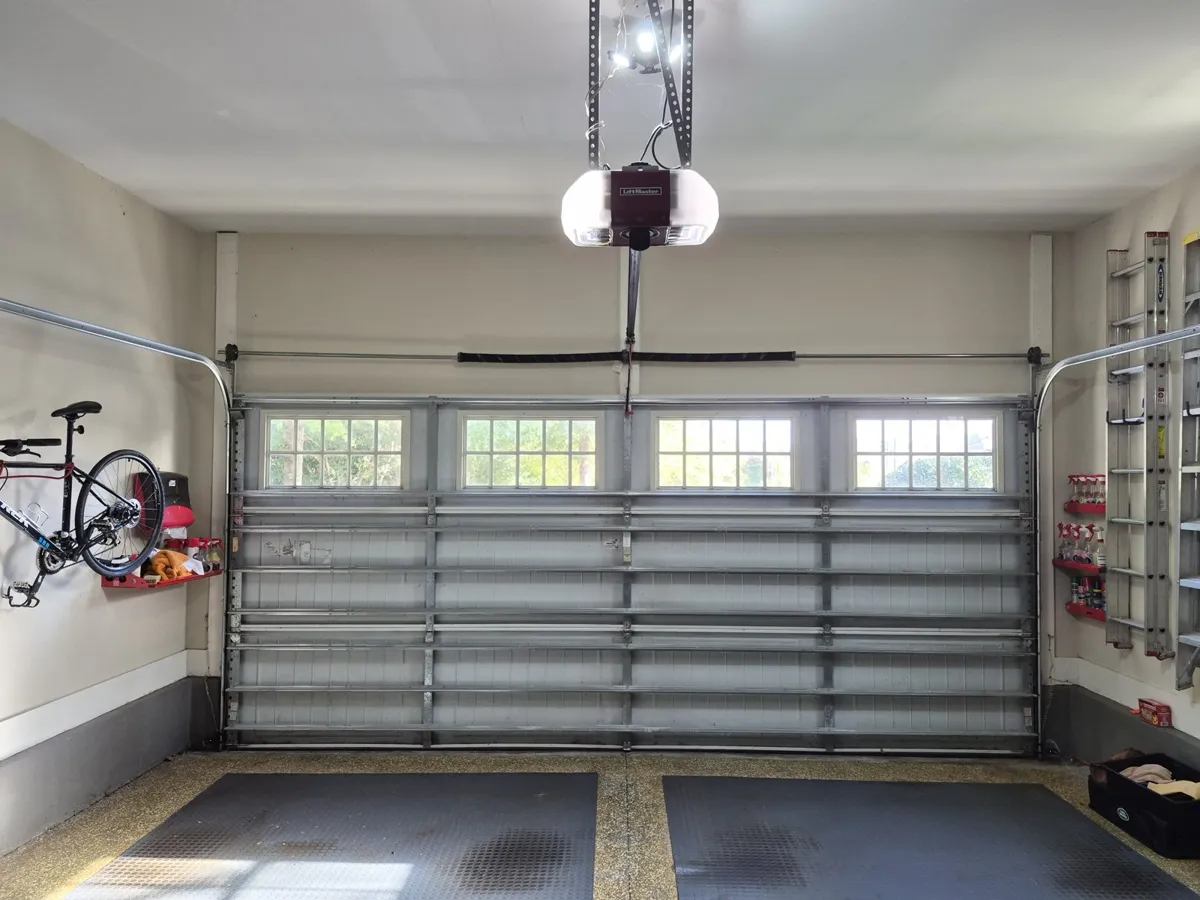
Springs are built for a set number of open-and-close cycles, then the steel fatigues and snaps. Many standard residential springs are rated around 10,000 cycles, according to garage door maker Garaga. Daily use decides how fast you get there, while rust, a wrong-size spring or a door that got heavier can shorten that life.
| Trips per day | 10,000-cycle spring | 20,000-cycle spring |
|---|---|---|
| 2 | About 13.7 years | About 27.4 years |
| 4 | About 6.8 years | About 13.7 years |
| 6 | About 4.6 years | About 9.1 years |
| 8 | About 3.4 years | About 6.8 years |
One trip here means the door goes up and comes back down once. Real springs often fall short of the math because of the conditions below, and a long-life figure doesn’t mean a spring will reach it.
What shortens spring life
- Rust. It thins the wire and starts cracks. Damp garages and doors left open for long stretches see more of it, which matters through a humid Triangle summer.
- A door that gained weight. Paint and added parts count. If you’ve added insulation to an older door, have the balance checked afterward, because the original springs were sized for the lighter door.
- The wrong spring or wrong tension. DASMA lists both as causes of short spring life, along with poor handling before installation.
- Skipped maintenance. Springs last longer when the door maker’s maintenance schedule is followed.
Spring broke again after only a few years? That usually points to one of these causes, so it’s worth asking why before buying the same spring twice.
Garage door spring life calculator
Enter how often your door runs and the spring’s cycle rating to get a rough estimate of its total life and the time it may have left. One cycle is one full open and one full close. This is an estimate based on arithmetic, not a prediction for your spring.
Estimate only. Real springs often fail sooner because of rust, a door that got heavier, the wrong spring size or skipped maintenance, and a spring can break at any point in its life. A high rating is the spring maker’s design target, not a promise. If your door already shows any of the signs in the Look, Don’t Lift check, skip the math and call.
Source for the 10,000-cycle standard: Garaga, a garage door manufacturer: springs page (“Residential springs typically last around 10,000 cycles (1 open/close)”). Source for typical use: Clopay spring system buying guide (an average door opens and closes about 1,500 times a year, roughly 4 a day). Read 2026-11-09.
What Cary and Raleigh neighbors say
American Pro holds 5.0 on Google, 600+ reviews on our Cary profile.
“American Pro Garage Doors did an amazing job fixing our residential garage door. One of the torsion springs snapped, and the garage door wouldn’t open at all.”

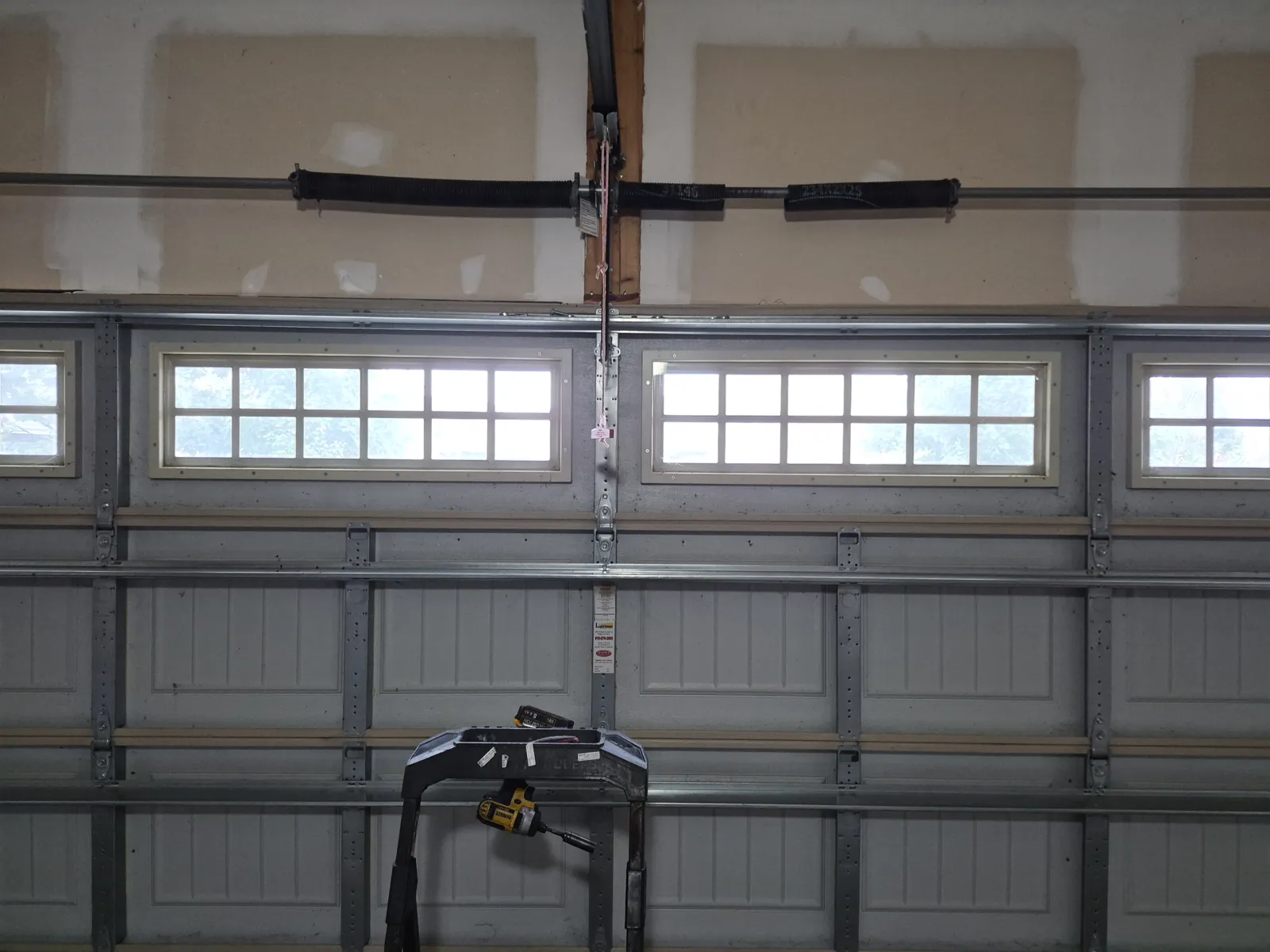
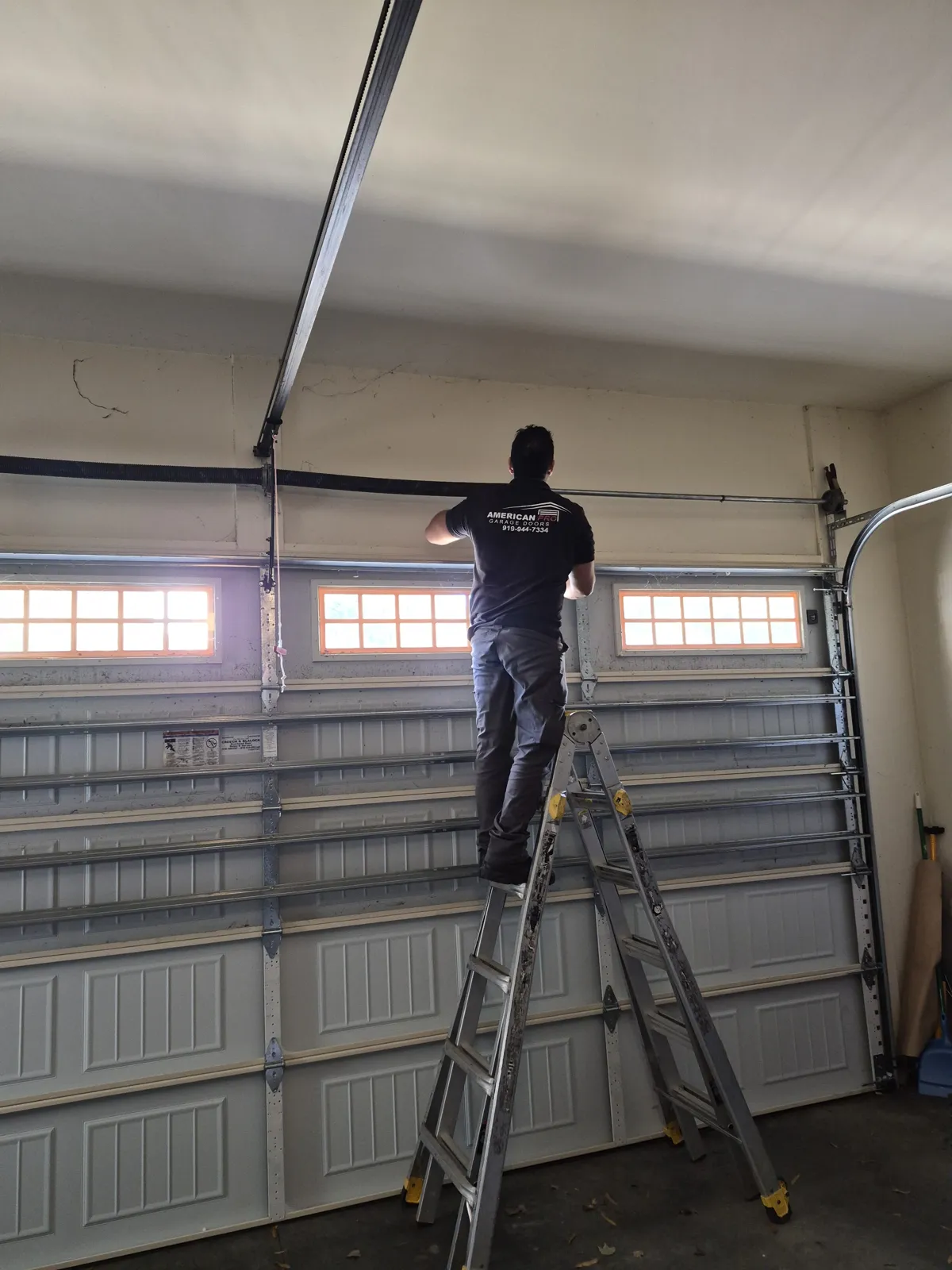
Recent spring work
Who comes out
A technician from our shop at 108 Woodwinds Industrial Ct in Cary. Tell us what you heard and what you see when you call, and we will schedule the visit.
Who does garage door spring repair in Cary, NC?
American Pro Garage Doors replaces torsion and extension springs from its shop at 108 Woodwinds Industrial Ct, Ste G, Cary, NC 27511. Call (919) 944-7334. The company holds 5.0 on Google from 600+ reviews.
Our Cary location is 108 Woodwinds Industrial Ct, Ste G. We replace garage door springs for homes in these cities:
- Spring repair in Cary
- Spring repair in Raleigh
- Spring repair in Durham
- Spring repair in Apex
- Spring repair in Holly Springs
- Spring repair in Fuquay-Varina
- Spring repair in Morrisville
- Spring repair in Chapel Hill
- Spring repair in Wake Forest
- Spring repair in Garner
Looking for something else?
- Door past saving: full door replacement
- Commercial door springs: commercial garage doors
- Researching parts and specs: torsion spring size chart and parts, extension spring parts, torsion cables
Garage door spring questions
How do I know if my garage door spring is broken?
The usual signs are a loud bang from the garage, a door that won't lift or stops after a few inches, a door that goes up crooked, and a visible gap in the coil above the door. Check by looking only, and don't test it with the opener.
How do I open my garage door with a broken spring?
Don't try. Without the spring, the door's full weight is unbalanced and can drop. Leave it closed, leave the red release cord alone, and call. If your car is inside, tell us when you call, and plan another ride until the door is fixed.
Can a garage door spring seriously hurt you?
Yes. Springs hold enough stored energy to cause serious injury when they break or when someone works on them without training. DASMA, the door industry's trade association, says spring systems should be repaired only by trained professionals.
Can a broken garage door spring be repaired or welded?
No. A snapped spring gets replaced, not repaired. "Spring repair" is the common phrase for that replacement. Welding isn't an option, and DASMA warns that heat near spring coils can create brittle spots that lead to early failure.
Should I replace both springs if only one broke?
Yes, on a two-spring door, replace both at the same time. Both have done the same number of cycles, so the survivor is usually close behind. DASMA recommends replacing both, even if one isn't broken. It also saves a second visit.
How much does it cost to replace a garage door spring in Raleigh or Cary?
The price depends on the spring type, the number of springs, the door's size and weight, and any worn parts such as cables. Call us for a quote, and ask whether it covers one spring or both.
How long do garage door springs last?
It depends on the spring's cycle rating and how often you use the door. Many standard residential springs are rated around 10,000 cycles, and one cycle is one open and one close. At four cycles a day that works out to about 6.8 years, and at two a day about 13.7 years. Rust, a door that got heavier, and the wrong spring can all shorten that, so treat any figure as an estimate.
Why does my garage door spring keep breaking?
Repeat failures usually point to a cause beyond normal wear: a spring too small for the door, a door that gained weight from paint or insulation, rust, or the wrong tension. Ask the technician to check the door's weight and balance before installing the same spring again.
Why are my two garage door springs different sizes?
Sometimes the door was built that way, and sometimes one spring was swapped during an earlier repair and doesn't match. A technician can tell the difference by measuring both springs against the door.
Will a broken spring damage my garage door opener?
It can. Springs carry the door's weight, and the opener only guides it. Running the opener against a door with a failed spring strains the motor and gears, which is one more reason to stop pressing the button.
Can I switch from extension springs to torsion springs?
Often, yes, depending on the door and the headroom above it. Torsion systems give smoother, more controlled lift, but a conversion can cost more than replacing a pair of extension springs. Ask us to compare both when we quote the job.
Sources
Last updated November 2026.
- DASMA: Garage Doors safety tips
- DASMA Technical Data Sheet 171: Official Color Codes for Torsion and Extension Springs
- DASMA Technical Data Sheet 190: Factors Affecting Spring Cycle Life
- Garaga: garage door springs (10,000-cycle residential figure)
- Clopay: Garage Door Spring Systems, a buying guide for homeowners (about 1,500 open-and-close trips a year)
Written by American Pro Garage Doors.
Door stuck? Leave it where it is and call.
Tell us what you heard and what you see, and we'll take it from there.
